How Chief Daniel Manuel sees AI data centres as an opportunity for stewardship

By Brook Nymark, Senior Manager, Thought Leadership, Bell
Chief Daniel Manuel leads the Upper Nicola Band (UNB) of the Syilx (Okanagan) First Nation at a moment when his community is being asked to weigh some of the biggest infrastructure choices in its history. He does not see those choices as a race to keep up with technology, or simply a chance to secure investment in the community. Instead, he approaches them as questions of land use, responsibility and the kind of future the Upper Nicola Band wants to help shape.
The importance and tradition of environmental stewardship
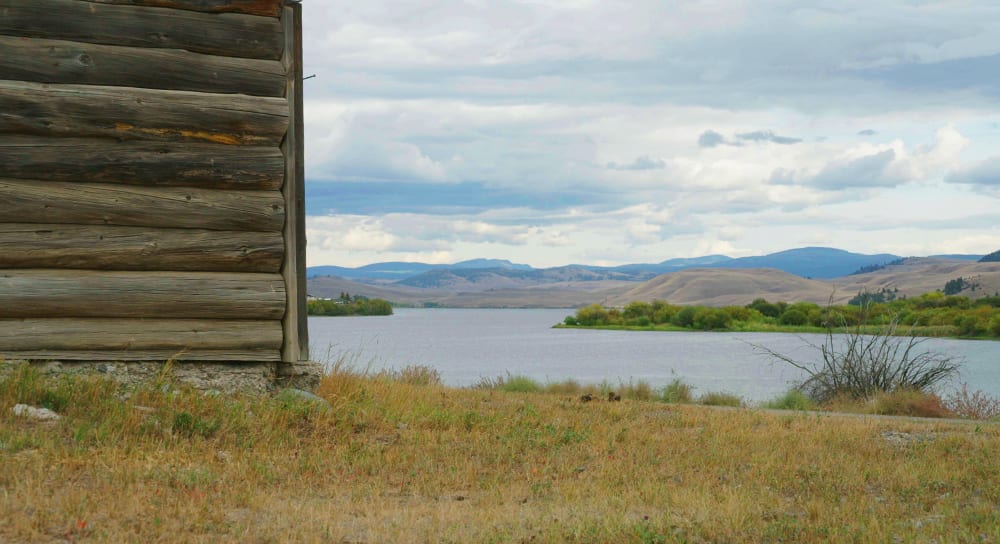
The decision to build an AI data centre within the Band’s territory begins with considering the environment and the people who live there. Chief Manuel explains that UNB remains a deeply land-based community, one whose members still rely on hunting, fishing, gathering, ceremony and seasonal use of the land. He ties that daily relationship to teachings that emphasize abundance, sustainability and responsibility to future generations. UNB’s own public materials reinforce that the community’s laws, values and identity are closely tied to oral teachings such as the Four Food Chiefs.1
This helps shape his perspective that projects like an AI data centre are not a stand-alone technology story. As with every development project, this one has to answer a basic question: does it make sense on the land and alongside the values of the Upper Nicola Band members?
Sharing values beyond the local community
Chief Manuel understands that projects of this scale are going to be built to meet the growing demand for AI; he also knows that their impact and purpose extend beyond the places where they are built. When a project happens in his community, Chief Manuel sees an opportunity for his community to help shape how it is designed, how it integrates into the environment and what standards need to be met.
Given their importance to the use of AI, these data centres can be seen as nation-building projects. By ensuring the design and construction agree with the values and teaching of their people, UNB is able to pass on the environmental benefits beyond the borders of their community. That view fits a path UNB has already been on for years. Chief Manuel points to decades of work in clean energy, from hydro-electric to solar and wind power.2, 3
Leadership during change: opportunity and responsibility
Seen through that lens, an AI data centre is not a pivot into a fashionable sector. It is the next layer in a longer strategy: building the infrastructure, relationships and practical capacity that let UNB take part in a changing economy without giving up its own priorities. Chief Manuel does not talk about lower-footprint development as a branding exercise. He talks about it as a direct response to lived experience and as a way to align future opportunities with the community’s land-based responsibilities.
Grounding choices in community consensus
Chief Manuel is also clear that the Upper Nicola Band does not separate environmental stewardship from community engagement. Consultation is not a box to be checked. Meaningful engagement, he explains, is part of what makes a project legitimate; support for a project happens through important stages. Members are first asked whether they support moving the proposal into the next phase of discussion and then later they get the chance to assess actual terms, land use and commercial arrangements before anything becomes final.
When this new data centre was announced in June of 2025, members were invited to information sessions, given disclosure materials and asked to vote on whether the project should move on at each next stage.4
That process matters, because it allows the community to share real concerns and learn more about the practical aspects of the project – instead of just relying on assurances. He recalls that people wanted clear answers about power demand and water use, especially whether the facility would rely on water for cooling. He says those questions were addressed directly by Band leadership, Bell and the other development partners – with the project ultimately being modified to align more closely with the desires of community members. The significance of that moment goes beyond a technical change. It is what consultation is meant to do: not simply inform people, but to create space for concerns to be tested and addressed on their merits.
Self-determination matters
Decisions like these also matter through the lens of sovereignty. Chief Manuel says economic resources are a foundation for sovereignty. Just as the Federal government is engaged in diversifying the nation’s trading partners, Chief Manuel’s community wants to diversify the Band’s economy, thereby reducing reliance on external resources and short-term government funding.
Public reporting on the proposed AI facility supports his plan, highlighting potential permanent jobs, construction jobs and tax revenues to support both individual members and the Band’s operational revenues. In Chief Manuel’s view, this matters not only because of economic growth, but because it helps create stronger, longer-lasting support for priorities like land-based learning, language work and local opportunities for young people.
That is what makes his perspective worth following. Chief Manuel does not begin with compute, models or national competitiveness. He begins with stewardship, considering whether a project fits a land-based responsibility to future generations. He asks whether the community can shape the environmental choices built into infrastructure the country increasingly needs. He asks whether development can proceed by consent, not by momentum alone. At a time when people can sometimes feel these conversations happen too late in the process, the project with Bell AI Fabric offers an example of how collaboration has potential to benefit everyone.
Sources:
1.https://uppernicola.com/#:~:text=Oral_story_of_the_Four_Food_Chiefs_-_How_Food_Was_Given and https://learn.syilx.org/how-food-was-given-four-food-chiefs/
2. https://syilx.org/historic-electricity-purchase-agreement-signed-with-bc-hydro-to-fulfil-2011-commitment-in-ilm-final-agreement/
3. https://elementalenergy.ca/2025/01/upper-nicola-band-and-elemental-energy-announce-signing-of-electricity-purchase-agreement-with-bc-hydro-for-94-mw-wind-project/
4. https://www.merrittherald.com/upper-nicola-indian-band-vote-yes-on-welcoming-one-of-the-countrys-largest-ai-data-centres/