Live from the pitch: how TSN revolutionized sports coverage with Bell 5G slicing
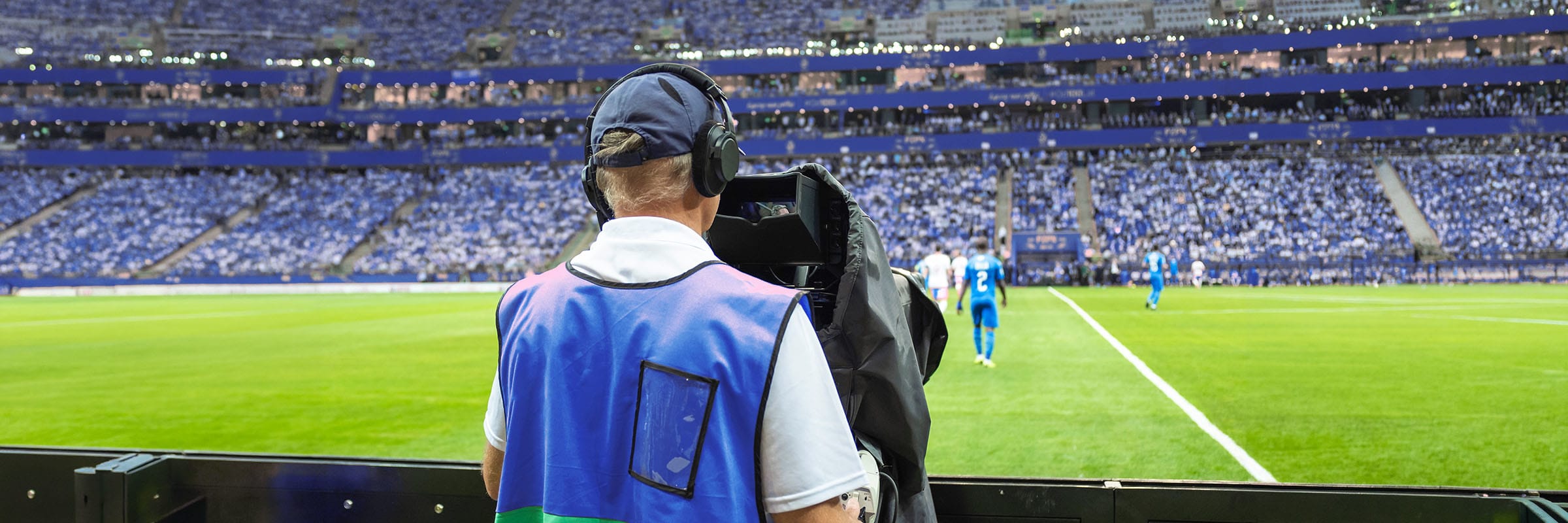
“When you are broadcasting live to millions of soccer fans during a global event, there is zero room for error. Partnering with Bell for 5G network slicing gave our production team the assured bandwidth and mobility needed to bring viewers right onto the pitch without worrying about stadium network congestion.”
Nicole Anderson, Senior Production Manager
TSN
A recent global soccer tournament brought unprecedented excitement to Canadian stadiums, attracting over 30 million unique viewers across Bell Media platforms. But for live sports producers, high-capacity venue coverage comes with extreme technical pressure. As tens of thousands of fans fill stadium seats, commercial mobile networks face massive surges in data traffic as spectators stream videos, upload clips and call Ubers.
With cellular demand at its highest during peak post-game moments, broadcasters have avoided relying on traditional shared cellular networks; they worry about lag, frozen frames or dropped feeds. Instead, they’ve traditionally relied on heavy physical fibre runs and extensive physical cabling across the venue to ensure signal integrity. However, soccer tournament regulations restricted the use of physical cables across the pitch and high-traffic fan zones, rendering traditional wired setups impractical. To avoid being left on the sidelines, TSN partnered with Bell to test an innovative solution: 5G network slicing.
"Post-game is essentially rush hour in the stadium. Thousands of fans are uploading videos and calling Ubers at the exact moment we need to go live from the pitch. Testing Bell’s 5G network slice gave us a private lane through all that noise."
When stadium congestion threatens the live feed
In live television broadcasting – especially for international events – even a three-second delay or signal freeze can ruin a broadcast and impact brand reputation. Broadcast-quality video requires sustained high-definition uplink speeds that traditional cellular connections cannot guarantee when surrounded by thousands of active smartphones.
"Post-game is essentially rush hour in the stadium," explains Nicole Anderson, Senior Production Manager at TSN. "Thousands of fans are uploading videos and calling Ubers at the exact moment we need to go live from the pitch. Testing Bell’s 5G network slice gave us a private lane through all that noise."
Laying physical cables provides stability, but severely restricts camera operators, creates tripping hazards and requires hours of labour-intensive setup and teardown. To be able to deliver the best possible coverage – and without adding stress in the control room – TSN needed a way onto the field to capture spontaneous, high-energy post-game interviews without being tethered to physical wires or risk getting overwhelmed by public cellular traffic.
"Bringing live broadcast demands and advanced telecom engineering together takes close coordination. Working alongside Bell’s technical team allowed us to test this technology in high-pressure, real-world conditions."
Engineering dynamic priority with 5G Advanced network slicing
To overcome stadium bottlenecks, Bell deployed a TSN-exclusive 5G network slice built on their 5G+ standalone core network. Network slicing acts like a dedicated VIP lane on a crowded multi-lane highway, partitioning a precise portion of the network exclusively for TSN’s video transmission.
"Bringing live broadcast demands and advanced telecom engineering together takes close coordination," says Anderson. "Working alongside Bell’s technical team allowed us to test this technology in high-pressure, real-world conditions."
Regardless of how congested the public cellular network became with fan traffic, TSN’s dedicated slice allocated assured bandwidth, priority routing and ultra-low latency. The slicing technology isolated critical broadcast streams from public data traffic, enabling crystal-clear video uplink directly from midfield to the broadcast control room – providing a strong blueprint for how sports may be produced moving forward.
"In live television, even a tiny delay ruins the flow of a broadcast. With the 5G slice, the audio and video connection between our on-field reporter and the studio was so seamless it felt like they were standing in the same room."
Real-world performance under peak crowd pressure
Tested during high-capacity trial environments at BMO Stadium and deployed during TSN’s tournament coverage that reached over 30 million unique viewers, the 5G slice was put to the ultimate test during post-game coverage – the exact window when stadium network congestion reaches its absolute peak as fans exit and flood the airwaves.
"In live television, even a tiny delay ruins the flow of a broadcast," Anderson notes. "With the 5G slice, the audio and video connection between our on-field reporter and the studio was so seamless it felt like they were standing in the same room."
During these critical post-match moments, the dedicated network slice delivered broadcast-grade video stability, enabling TSN to maintain uninterrupted live feeds with minimal frame drops or lag. Camera operators gained complete physical freedom to navigate the pitch, capture unique angles and pursue spontaneous interviews. Ultimately, the trial gave the TSN production team a seamless, "no news is good news" live broadcast, with connectivity running smoothly throughout.
"Highly reliable connection quality completely changes how we tell the story of the game. When our directors don't have to worry about a signal dropping, they can bring fans right onto the sidelines for a far more immersive experience."
Streamlining game-day logistics and unlocking new visual angles
"Moving away from heavy physical cabling is a game-changer for production teams," says Anderson. "Being cable-free speeds up our setup times, reduces our equipment footprint and gives our camera operators the freedom to move anywhere on the field to capture spontaneous moments as they happen."
By replacing rigid physical connections with reliable wireless network slicing, production crews dramatically reduced setup and teardown times, shrank on-site equipment needs and optimized technical staffing logistics.
Beyond operational efficiency, the consistent reliability gave directors and producers complete confidence to make split-second live cuts to people on the field. "Highly reliable connection quality completely changes how we tell the story of the game," Anderson adds. "When our directors don't have to worry about a signal dropping, they can bring fans right onto the sidelines for a far more immersive experience."
Building the future of wireless live event production
The success of the recent soccer tournament proof of concept offers a promising model for future major sporting events, music festivals and live remote broadcasts across Canada. And TSN’s success did not go unnoticed. Following the broadcast, production colleagues from other networks saw the cable-free coverage and wanted to know how TSN maintained seamless feeds during peak crowd exit.
For live event producers considering 5G network slicing, early technical collaboration and real-world simulation testing are essential steps to building operational trust. As 5G Standalone capabilities mature, TSN and Bell continue to explore new creative possibilities, including multi-camera wireless feeds, mobile command integrations and agile production setups that elevate the viewing experience for fans nationwide.
Read this article to find out more about how network slicing or talk to a Bell expert today to discover how Bell’s advanced 5G network slicing may help deliver dedicated bandwidth, low latency and wireless freedom to your business operations.
Results described in this case study are based on a proof-of-concept trial conducted under specific venue and network conditions. Individual results may vary depending on venue, network availability, device compatibility and other factors. Bell does not guarantee specific performance outcomes.